The Great Pyramid of Giza (called
the Pyramid of Khufu and the Pyramid of Cheops) is the oldest and
largest of the three pyramids in the Giza Necropolis bordering what is
now El Giza, Egypt. It is the oldest of the Seven Wonders of the Ancient
World, and the only one to remain largely intact. Egyptologists believe
that the pyramid was built as a tomb for fourth dynasty Egyptian
Pharaoh Khufu (Cheops in Greek) over an approximately 20 year period
concluding around 2560 BC. Initially at 146.5 metres (480.6 ft), the
Great Pyramid was the tallest man-made structure in the world for over
3,800 years. Originally, the Great Pyramid was covered by casing stones
that formed a smooth outer surface; what is seen today is the underlying
core structure. Some of the casing stones that once covered the
structure can still be seen around the base. There have been varying
scientific and alternative theories about the Great Pyramid's
construction techniques. Most accepted construction hypotheses are based
on the idea that it was built by moving huge stones from a quarry and
dragging and lifting them into place.
Showing posts with label Wonders Of The World. Show all posts
Saturday, 12 May 2012
Sunday, 6 May 2012
Hanginging Gardens of Babylon
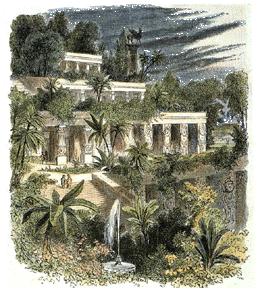
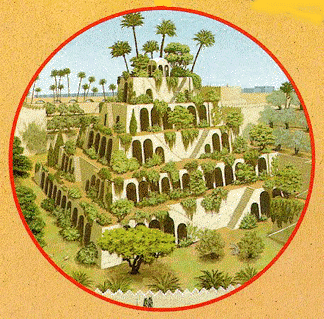
This legendary garden, one of the seven wonders of the ancient world, was built on the banks of the Euphrates river circa 600 B.C. It may never have existed except in the imagination of Greek poets and historians although archaeologists claim to have found the remains of its walls. Most scholars attribute its construction to King Nebuchadnezzar II to console his Median wife, Amytis, who missed the mountains and greenery of her home land. Others contend that it was the work of the semi-legendary Assyrian Queen Sammu-Ramat (Semiramis in Greek). The Gardens didn't really "hang" but were built on terraces which were part of the ziggurat and was irrigated by water lifted up from the Euphrates. There is not a single mention of a "hanging garden" in the Babylon cuneiform record but this is probably because it was considered part of the ziggurat structure and not a separate entity in itself. The images you see below are artistic recreations of the gardens based on descriptions of ancient Greek historians and poets.
Saturday, 5 May 2012
Friday, 4 May 2012
Subscribe to:
Posts (Atom)